
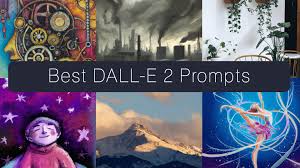
It’s like having a super-powered paintbrush but not knowing where to start. The goal is to move past simple ideas and craft prompts that unlock truly unique and breathtaking visuals. This guide will help you do just that.
We’ll dive deep into making prompts that give you exactly what you imagine, or even better. You’ll learn how to describe scenes, choose styles, and add those special touches that make AI art pop.
DALL-E prompt ideas are crafted descriptions used to guide artificial intelligence art generators. They combine elements like subjects, actions, settings, artistic styles, and mood to create unique images. Effective prompts are detailed and specific, aiming to translate a user’s vision into visual output.
Understanding What Makes a DALL-E Prompt Sparkle
Think of a DALL-E prompt as a recipe for an image. The AI is your chef. If you give it vague ingredients, you get a bland dish. But with specific, creative ingredients, you get a masterpiece.
What makes a prompt good? It’s about being clear and descriptive. It’s also about being creative and sometimes a little playful. The AI can understand a lot of detail. The more detail you give, the closer the image will be to what you have in mind.
We want to go beyond just saying “a cat.” We want to say “a fluffy ginger cat wearing a tiny crown, sitting on a velvet cushion, lit by a single candle.” See the difference? That added detail paints a much clearer picture for the AI.
My Own Prompt Mishaps and Breakthroughs
I remember one late night, I was trying to create a futuristic cityscape. I typed “city at night.” What I got was… okay. It was a city. It was night. But it was generic, like a stock photo you’d see everywhere. I felt a wave of disappointment wash over me. It wasn’t bad, but it wasn’t magical.
So, I tried again. I thought about what kind of futuristic city I wanted. Was it sleek and clean? Gritty and neon-lit? I decided on neon. I added words like “glowing,” “holographic,” and “flying cars.” I even specified the weather: “rain slicked streets reflecting neon signs.” The second attempt was miles better. It had atmosphere. It had a story. That night, I learned that the magic is in the words.
Core Prompt Elements Breakdown
Subject: What is the main thing in the picture? (e.g., a dog, a castle, a person)
Action: What is the subject doing? (e.g., running, sleeping, flying)
Setting/Environment: Where is it happening? (e.g., a forest, a desert, outer space)
Style: How should it look? (e.g., a painting, a photo, a cartoon)
Mood/Atmosphere: What feeling should it give? (e.g., happy, scary, peaceful)
Building Your Prompt: From Simple to Spectacular
Let’s break down how to build a prompt. It’s a step-by-step process that makes it easy to add detail.
1. The Subject: Who or What is it?
Start with the main focus. Instead of “tree,” try “an ancient oak tree.” Instead of “car,” try “a vintage red convertible.” This immediately makes your subject more interesting.
2. The Action: What’s Happening?
Is your subject just sitting there, or is it doing something? A “knight” is one thing. A “knight battling a dragon” is a whole story.
Try verbs that show movement and energy. “Leaping,” “soaring,” “whispering,” “glowing.”
3. The Setting: Where is This Taking Place?
The background matters. Is your knight in a dark cave? On a sunny mountaintop? The setting adds context and mood.
Think about the details of the place. “A bustling market square,” “a quiet, misty forest,” “a futuristic laboratory.”
Quick Scan: Subject + Action + Setting Ideas
| Subject: | Cat | Robot | Wizard |
| Action: | Drinking tea | Exploring | Casting spells |
| Setting: | Cozy library | Alien planet | Magical academy |
4. The Style: How Should It Look?
This is where you tell the AI what kind of art you want. Do you want a photograph? A watercolor painting? A pixel art game character?
Examples of styles:
- “photorealistic”
- “oil painting”
- “watercolor sketch”
- “anime style”
- “vintage poster”
- “3D render”
- “pixel art”
- “cinematic lighting”
5. The Mood and Atmosphere: What’s the Vibe?
This is about the feeling. Is it happy and bright? Dark and mysterious? Peaceful and calm?
Use words like:
- “serene”
- “dramatic”
- “joyful”
- “eerie”
- “whimsical”
- “nostalgic”
Adding Artistic Flair and Detail
Once you have the basic structure, you can add more layers to make your prompt truly shine. These are the details that often make the difference between a good image and a great one.
Lighting: The Mood Setter
Lighting can change an image completely. Is the light soft and warm? Harsh and dramatic?
Try terms like:
- “golden hour lighting”
- “moonlit glow”
- “studio lighting”
- “rim lighting”
- “volumetric lighting”
- “dramatic shadows”
Color Palette: The Emotional Tone
What colors dominate the scene? Colors have power over our feelings.
Consider using:
- “vibrant color palette”
- “muted tones”
- “monochromatic blue”
- “pastel colors”
- “high contrast colors”
Composition: The Camera Angle
How is the scene framed? This is like telling the “camera” where to look.
Use phrases like:
- “wide shot”
- “close-up portrait”
- “overhead view”
- “dutch angle”
- “rule of thirds”
Contrast Matrix: Myth vs. Reality in Prompting
Myth: More words are always better.
Reality: Clear, descriptive words are better than just many words. Specificity matters more than quantity.
Myth: The AI understands your thoughts.
Reality: The AI interprets your text. You need to translate your thoughts into precise language it can process.
Myth: There’s one “correct” way to prompt.
Reality: Prompting is creative. Different prompts can lead to amazing, unique results. Experimentation is key.
Myth: AI art lacks soul.
Reality: The “soul” comes from your vision and how you guide the AI. Your creativity is the source.
Artist Inspiration: Learning from the Masters
You can tell the AI to generate an image in the style of a famous artist. This is a powerful way to get a specific aesthetic.
Examples:
- “in the style of Van Gogh”
- “inspired by H.R. Giger”
- “like a painting by Monet”
- “with the detail of Leonardo da Vinci”
Be mindful of using living artists’ names; focus on those with established legacies.
Adding Texture and Detail
What is the surface like? Is it smooth, rough, shiny, fuzzy?
Consider words like:
- “rough bark texture”
- “smooth, polished metal”
- “soft, fluffy fur”
- “gritty sand”
- “glowing embers”
Creative Prompt Ideas and Examples
Let’s put it all together with some concrete examples. I’ll give you a basic idea and then show how to build it into something more detailed and exciting.
Example 1: A Cat Doing Something
- Basic: “a cat”
- Better: “a fluffy cat sleeping”
- Good: “a fluffy orange tabby cat sleeping in a sunbeam on a windowsill”
- Spectacular: “a fluffy orange tabby cat curled up asleep in a warm sunbeam on a dusty wooden windowsill, dappled light, peaceful atmosphere, photorealistic”
Example 2: A Landscape
- Basic: “a mountain”
- Better: “snowy mountains”
- Good: “majestic snow-capped mountains at sunset”
- Spectacular: “majestic snow-capped mountains under a dramatic, fiery sunset, with a lone eagle soaring in the foreground, epic landscape, wide shot, oil painting style”
Example 3: A Character Concept
- Basic: “a knight”
- Better: “a futuristic knight”
- Good: “a knight in glowing futuristic armor standing on a moon base”
- Spectacular: “a heroic knight in sleek, glowing futuristic armor, holding a plasma sword, standing on a desolate moon base with Earth visible in the distant sky, cinematic lighting, sci-fi concept art”
Observational Flow: Prompting for a specific mood
Start with a Feeling: Imagine “calm.”
Choose a Subject: What feels calm? Maybe water, a quiet room, or nature.
Add a Setting: A calm lake at dawn.
Refine with Details: “A perfectly still, glassy lake reflecting the soft pastel colors of dawn. Mist hovers gently over the water. No wind, just quiet.”
Add Style: “Impressionistic watercolor painting.”
Final Prompt: “A perfectly still, glassy lake reflecting soft pastel colors of dawn, gentle mist hovering over the water, quiet atmosphere, impressionistic watercolor painting.”
Prompting for Specific Emotions and Themes
You can prompt for specific emotions. This is where your creative vision really shines.
Prompting for Joy and Wonder
Imagine children playing, or a fantastical discovery.
- “A group of children laughing and chasing fireflies in a meadow at twilight, magical glow, whimsical, storybook illustration”
- “A lone explorer discovering a hidden, glowing crystal cave, sense of awe and wonder, vibrant blues and purples, fantasy art”
Prompting for Mystery and Intrigue
Think about shadows, fog, or hidden elements.
- “A dimly lit, foggy Victorian street at midnight, a lone figure in a trench coat walking away, noir atmosphere, dramatic shadows, cinematic photo”
- “An ancient, overgrown temple entrance shrouded in mist, strange symbols carved into the stone, sense of mystery and foreboding, digital painting”
Prompting for Peace and Serenity
Focus on soft light, calm scenes, and gentle elements.
- “A tranquil Japanese garden with a koi pond, soft morning light, cherry blossoms falling gently, zen atmosphere, serene, watercolor style”
- “A cozy cabin interior with a crackling fireplace and a window showing a snowy landscape, warm light, peaceful, photorealistic”
Exploring Different Art Mediums and Techniques
Don’t limit yourself to just “painting” or “photo.” Explore the vast world of art styles.
Sculpture and 3D Art
You can ask for images that look like they are made of physical materials.
- “A marble sculpture of a mythical creature, intricate details, studio lighting, high resolution”
- “A character designed as a detailed 3D render, Pixar style, vibrant colors, smooth surfaces”
- “A kinetic sculpture made of polished chrome, reflecting light, abstract art”
Illustrative Styles
From comic books to children’s books.
- “A superhero landing, bold comic book style, dynamic poses, bright colors, halftone dots”
- “A whimsical forest creature, children’s book illustration, soft pastels, friendly style”
- “A vintage travel poster for a fictional city, art deco style, rich colors, clean lines”
Textural Styles
Focus on how the image feels.
- “An image made of stitched embroidery, detailed threads, fabric texture, folk art style”
- “A landscape rendered in mosaic tiles, vibrant colors, geometric patterns”
- “A portrait made from crumpled paper textures, rough edges, mixed media art”
Stacked Micro-Sections: Advanced Prompt Components
Camera Lens: “Shot with a wide-angle lens,” “macro lens detail,” “telephoto perspective.”
Resolution/Quality: “4k resolution,” “8k,” “highly detailed,” “ultra-realistic.”
Rendering Engine: “Unreal Engine,” “Octane Render,” “V-Ray render” (use these for a specific 3D look).
Color Grading: “Cinematic color grading,” “warm tones,” “cool blue filter.”
Tips for Better DALL-E Prompting
Here are some practical tips that can help you get better results from your prompts.
Be Specific, Not Vague
Always ask yourself: “Can I add more detail here?” Instead of “dog,” try “golden retriever puppy.” Instead of “house,” try “Victorian mansion with a sprawling garden.”
Experiment with Order
Sometimes, changing the order of your words can lead to different emphasis and results. Try putting the most important element first.
Use Negative Prompts (if available)
Some AI tools allow you to specify what you don’t want. For example, if you keep getting blurry images, you might use a negative prompt like “blurry, out of focus.” Check if your tool supports this.
Iterate and Refine
Your first prompt is rarely your last. Look at the image generated. What’s missing? What’s wrong? Adjust your prompt and try again. This is how you learn.
Understand Your AI Model
Different AI models understand prompts in slightly different ways. What works perfectly for one might need tweaking for another. Learn the quirks of the tool you are using.
Common Questions People Ask About DALL-E Prompts
What is the best way to start a DALL-E prompt?
Start with the main subject and then add descriptive details about its appearance, action, and the environment it’s in. Think about the style and mood you want too.
How do I make DALL-E art look like a specific artist?
You can add phrases like “in the style of ” or “inspired by ” to your prompt. It’s best to use artists who are well-known and have a distinct style.
Can I prompt for specific emotions or feelings in the art?
Yes! Use descriptive words for emotions like “joyful,” “melancholy,” “peaceful,” or “chaotic.” Combine these with visual elements that support the feeling.
How do I get a photorealistic look?
Include terms like “photorealistic,” “ultra-realistic,” “8k,” “detailed,” and specify lighting conditions like “studio lighting” or “natural light.” You can also mention camera terms like “shot on a DSLR.”
What if my prompt isn’t working as expected?
Try rephrasing your prompt. Be more specific, add or remove descriptive words, or change the order. Experimentation is key to understanding how the AI interprets your words.
Can I use abstract concepts in my prompts?
Yes, but be prepared for more abstract results. You might prompt for “the feeling of nostalgia as a visual metaphor” or “the concept of time represented as flowing water.” The AI will try to interpret these abstract ideas visually.
Bringing Your Vision to Life
Creating compelling AI art with DALL-E is a journey of creativity and exploration. It’s about learning to speak the AI’s language through vivid descriptions and imaginative ideas. By focusing on clear subjects, engaging actions, detailed settings, and diverse artistic styles, you can transform your prompts from simple requests into powerful instructions.
Remember, the best prompts are often the ones that are most specific and evocative. Don’t be afraid to experiment, combine different elements, and push the boundaries of what you think is possible. Happy prompting!




Leave a Reply