
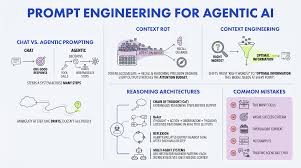
What Is Agentic AI Prompting?
Think of it this way: normal AI prompting is like giving a chef a recipe. You tell them exactly what to do, step by step. Agentic AI prompting is more like telling the chef you want a “special birthday cake for a 5-year-old who loves dinosaurs.” The chef then uses their knowledge to plan, decide, and create the cake.
They figure out the ingredients, the steps, and how to make it look good.
Agentic AI refers to AI systems that can act with a degree of autonomy. They have goals and can take actions to reach them. Prompting is how we communicate with AI.
So, agentic AI prompting is the art of giving AI instructions that enable this independent action. It’s about setting a high-level objective and letting the AI figure out the best way to get there.
This kind of AI can plan, reason, and execute tasks. It’s not just about answering a question. It’s about solving a problem.
The AI becomes more like a collaborator or an assistant. It can handle complex, multi-step processes. This is a big step up from simple command-and-response AI.
Why Does Agentic AI Prompting Matter?
Most of us use AI for quick tasks. We might ask it to write an email or summarize a document. But the real power of AI lies in its ability to tackle bigger challenges.
Agentic AI prompting helps us unlock that potential. It allows AI to do more complex work for us.
Imagine needing to plan a complex project. Instead of breaking down every single step yourself, you could tell an agentic AI your overall goal. It could then research, schedule, delegate (to other AI or even humans), and monitor progress.
This saves a huge amount of time and mental effort.
It also means AI can adapt better to new situations. If something unexpected happens, an agentic AI can adjust its plan. This is crucial for real-world applications where things don’t always go as planned.
It moves AI from a tool to a more capable partner.
How Does Agentic AI Work?
At its heart, agentic AI prompting relies on a few key ideas. The AI needs to understand the goal. It needs to break that goal into smaller, manageable tasks.
Then, it needs to decide which task to do next. It also needs to be able to learn from its actions and adjust.
Think of it like this: a game-playing AI trying to win chess. The goal is to win. It breaks this down into moves.
It evaluates potential moves. It considers the opponent’s likely response. It might try a new strategy if its current one isn’t working.
This involves a cycle of planning, acting, and reflecting.
For us, the prompter, it means we shift our focus. We don’t give a list of commands. We describe the desired outcome.
We might also provide context, constraints, or preferences. The AI then uses its internal “reasoning” or “planning” capabilities to fill in the gaps. This often involves a loop where the AI generates a plan, executes a step, and then reviews its progress before deciding on the next step.
Key Components of Agentic AI
Goal Definition: The AI clearly understands what it needs to achieve. This is set by the prompt.
Task Decomposition: The AI breaks down the main goal into smaller steps or sub-tasks.
Planning: The AI sequences these tasks in a logical order to achieve the goal.
Execution: The AI carries out each task, often using tools or interacting with environments.
Reflection/Learning: The AI reviews the outcome of its actions and adjusts its plan if needed.
My Own “Aha!” Moment with Agentic AI
I remember trying to organize a small community event. It was a bake sale for a local charity. I had the date and the location.
But then the details started piling up. Who would bake? What kinds of treats?
How would we advertise? I felt overwhelmed just thinking about it.
I decided to experiment. I told an advanced AI model, “Help me organize a bake sale for the local animal shelter on Saturday, October 26th, from 10 AM to 2 PM at Elm Street Park. My goal is to raise $500.” I didn’t give it a step-by-step plan.
I just gave it the goal and the key details.
What happened next amazed me. The AI generated a list of tasks. It suggested roles for volunteers (bakers, sellers, setup crew).
It asked about dietary needs for baked goods. It even drafted social media posts and a flyer. It asked me which approach I preferred for managing money.
It felt like I had a dedicated assistant who knew exactly what to do next. That’s when I truly grasped the power of letting AI figure things out based on a clear objective.
Types of Agentic AI Prompts
There isn’t just one way to prompt an agentic AI. Different approaches work better for different situations. The key is to provide enough direction without being overly restrictive.
You want to guide, not dictate every single move.
Some prompts set a broad objective. Others might provide a specific framework. Some even encourage the AI to ask clarifying questions.
The goal is to find the right balance for the task at hand.
Prompting Styles for Agentic AI
1. Goal-Oriented Prompts
What it is: State the final desired outcome clearly. The AI figures out the steps.
Example: “Research the top three sustainable packaging solutions for small e-commerce businesses and provide a summary of pros and cons for each.”
2. Role-Playing Prompts
What it is: Assign a persona or role to the AI. This influences its decision-making.
Example: “Act as a financial advisor. My goal is to save for a down payment on a house in five years. I can save $1,000 per month.
What investment strategy should I consider?”
3. Constraint-Based Prompts
What it is: Define specific limitations or rules the AI must follow.
Example: “Write a blog post about the benefits of reading for children. It must be under 500 words, use simple language, and avoid technical jargon. The target audience is parents.”
4. Iterative Prompts (with feedback loops)
What it is: The AI performs an action, you provide feedback, and it refines its approach.
Example: “Generate a draft of a marketing email for a new coffee blend. . Review this draft.
Make it more persuasive and highlight the ‘rich aroma’ aspect.”
Agentic AI in Action: Real-World Uses
We’re already seeing agentic AI pop up in many places. It’s not just for tech experts. These systems are starting to make everyday tasks easier and more efficient.
One big area is software development. AI can help write code, find bugs, and even suggest improvements. This speeds up the creation of new applications and websites.
It frees up developers to focus on more creative aspects.
In customer service, agentic AI can handle complex inquiries. It can go beyond simple FAQs. It can access databases, process requests, and provide personalized solutions.
This leads to faster and more satisfying customer experiences.
Examples of Agentic AI Applications
1. Content Creation and Marketing
AI can generate blog posts, social media updates, and ad copy. It can also help strategize content calendars based on trends and goals.
2. Research and Analysis
Agentic AI can sift through vast amounts of data. It can identify patterns, summarize findings, and even predict future trends. This is valuable in fields like finance, science, and market research.
3. Project Management Assistance
AI can help plan projects, assign tasks, track deadlines, and identify potential risks. It acts as a proactive assistant to project managers.
4. Personal Assistants
Beyond setting reminders, agentic AI can help plan trips, manage schedules, and even suggest activities based on your preferences and past behavior.
What This Means for You
Understanding agentic AI prompting isn’t just for developers. It’s for anyone who wants to get more out of AI. As these tools become more common, knowing how to guide them effectively will be a valuable skill.
It means you can delegate more complex tasks. You can get help with planning, problem-solving, and decision-making. It’s about working smarter, not harder.
It’s about using AI to amplify your own capabilities.
When is it normal to use agentic AI? Pretty much any time you have a goal that requires multiple steps or some level of strategic thinking. Whether it’s planning a vacation, organizing a complex event, or brainstorming business ideas, agentic AI can assist.
When should you be cautious? Always remember that AI is a tool. It doesn’t have real-world understanding or consciousness.
Double-check its output, especially for critical tasks. Make sure the AI’s goals align with your own values and objectives.
Simple checks include: Does the AI’s plan make logical sense? Are the actions it proposes ethical and safe? Does the final output meet your needs and expectations?
Always maintain oversight.
Quick Tips for Agentic Prompting
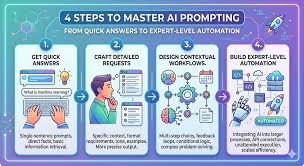
Getting started with agentic AI prompting is easier than you might think. The most important thing is to be clear about what you want to achieve. Don’t get bogged down in trying to tell the AI how to do it.
Focus on the desired outcome. Provide any necessary background information or constraints. Be prepared to refine your prompt based on the AI’s initial responses.
It’s a conversation, not a one-time command.
Practical Prompting Advice
1. Be Specific About the Goal
Clearly state the desired end result. What does success look like?
2. Provide Context
Give the AI relevant background information. Who is the audience? What are the constraints?
3. Define Boundaries
Set any limits or rules the AI must follow. This could be word count, tone, or specific actions to avoid.
4. Encourage Questions
If the AI is sophisticated, you can prompt it to ask for clarification if needed. This helps avoid misunderstandings.
5. Iterate and Refine
Don’t expect a perfect answer on the first try. Review the AI’s output and adjust your prompt to guide it closer to your goal.
Frequently Asked Questions about Agentic AI
What’s the difference between a regular AI prompt and an agentic AI prompt?
A regular AI prompt is like a direct command, asking for a specific piece of information or a single action. An agentic AI prompt is more like setting an objective or a goal, and the AI figures out the steps and actions needed to achieve it on its own.
Can any AI do agentic prompting?
No, not all AI models are designed for agentic behavior. It requires AI models with advanced reasoning, planning, and decision-making capabilities. Newer, more complex large language models are typically capable of this.
Is agentic AI the same as Artificial General Intelligence (AGI)?
Not quite. Agentic AI can perform specific tasks autonomously and intelligently. AGI refers to AI that can understand, learn, and apply intelligence across a wide range of tasks, much like a human.
Agentic AI is a step toward more capable AI, but not AGI itself.
How do I know if my AI is acting agentically?
If the AI is proactively breaking down a complex request into smaller steps, making decisions about which step to do next, and adjusting its approach based on feedback or new information, it’s likely acting agentically.
What are the risks of using agentic AI?
Risks include unintended consequences if the AI misinterprets goals, potential for errors if not properly supervised, and ethical concerns regarding autonomy and decision-making. Always ensure AI actions align with human values and safety.
How can I make my prompts more effective for agentic AI?
Focus on clearly defining your desired outcome, providing necessary context and constraints, and allowing the AI room to plan. Experiment with different prompting styles to see what works best for your specific AI model and task.
Wrapping Up
Agentic AI prompting is an exciting frontier. It’s about building smarter partnerships with AI. By understanding how to guide these systems with clear objectives, we can unlock powerful new capabilities.
Don’t be afraid to experiment and see what amazing things you and your AI can achieve together.





Leave a Reply