
ChatGPT prompts for writers can help you brainstorm ideas, create outlines, draft content, and even refine your work. By using specific and clear instructions, you can leverage AI to overcome writer’s block, explore new angles, and improve the overall quality of your writing projects.
Understanding ChatGPT for Writers
So, what exactly is ChatGPT, and why is it a game-changer for writers? Think of it as a very smart, very helpful writing assistant. It’s a type of artificial intelligence that has learned from a huge amount of text data.
This means it can understand and generate human-like text. For writers, this opens up a world of possibilities.
It can help you with many parts of your writing journey. This includes coming up with ideas when your mind is blank. It can also help you organize those ideas into a clear structure.
Then, it can even help you write the actual words. And if you’re done writing but want to make it better, it can help there too.
The key to using ChatGPT effectively is knowing how to ask it the right questions. These are called prompts. A good prompt is like giving clear directions to your assistant.
The better the directions, the better the work you’ll get back. This might seem simple, but it takes a little practice to get it just right. We’ll go through how to do this.
The Power of Specific Prompts
Let’s talk about why being specific is so important. If you just ask ChatGPT, “Write a story,” you’ll get something. But it might not be what you wanted at all.
It’s like asking a chef to “make food.” You might get a sandwich, or you might get a five-course meal. You never really know.
When you give ChatGPT a specific prompt, you guide its output. You tell it what kind of story, who it’s about, and what should happen. This control is what makes it so useful.
Instead of generic text, you get tailored content. You are steering the AI toward your vision.
This means less editing later. It also means you spend less time trying to fix something that wasn’t right from the start. Learning to craft these detailed prompts is a skill.
It’s a skill that pays off big time for any writer. We’ll look at examples of good prompts soon.
Brainstorming Ideas with AI
Writer’s block is a common enemy for all writers. That moment when you stare at a blank page and your mind is just. empty.
ChatGPT can be a fantastic tool to break through this. It can help you generate fresh ideas when you feel like you’ve run out of them.
The trick is to ask for a variety of options. You can ask it to explore different themes, characters, or scenarios. Don’t just ask for “story ideas.” Instead, try something more focused.
For example, you could ask for ideas about a character who discovers a hidden talent. Or you could ask for plot twists in a historical setting.
I remember one time I was stuck on a blog post topic. I felt like I’d covered everything. I told ChatGPT, “Give me five unique blog post ideas about sustainable living for city dwellers.” It came back with angles I hadn’t even considered, like urban beekeeping and balcony gardening.
That alone saved me hours of staring at a screen.
Idea Generation Prompts
Prompt Type: Theme Exploration
Example: “Generate 10 unique story themes exploring the concept of second chances. Focus on everyday people, not superheroes.”
Prompt Type: Character Concepts
Example: “Suggest five unusual character archetypes for a mystery novel set in a small coastal town. Include a brief personality trait for each.”
Prompt Type: Plot Starters
Example: “Give me three compelling opening scenarios for a sci-fi story about time travel gone wrong. Each should set up an immediate problem.”
Developing Story Concepts
Once you have a spark of an idea, you need to develop it. This means adding details, building characters, and thinking about the world your story will inhabit. ChatGPT can help you flesh out these initial thoughts into something more solid.
You can ask it to describe a character in more detail. You can ask it to suggest motivations for a character’s actions. It can also help you build the setting of your story.
Imagine you have a character who is a baker in a magical city. You can ask ChatGPT to describe what that city looks like, smells like, and feels like.
This process helps add depth and richness to your narrative. It’s like adding layers to a painting. Each layer adds more detail and complexity.
For instance, I asked ChatGPT to help me build a character for a fantasy story. I gave it a basic idea: a reluctant healer. It suggested that her healing magic came at a physical cost to herself, and that she was ostracized because of it.
This gave me so much more to work with!
Character & Setting Prompts
Prompt Type: Character Deep Dive
Example: “My character is a grumpy librarian who secretly loves romance novels. What are some hobbies or hidden talents she might have that contrast with her public persona?”
Prompt Type: World Building Details
Example: “Describe a bustling marketplace in a steampunk city. What unique sights, sounds, and smells would be present?”
Prompt Type: Relationship Dynamics
Example: “Suggest three possible conflicts between a cautious protagonist and an impulsive sidekick in a treasure hunt story.”
Creating Outlines and Structures
A good story needs a solid structure. Without one, it can feel messy or unfocused. Many writers find creating an outline to be a chore.
But it’s essential for a clear narrative flow. ChatGPT can be a great partner in this task.
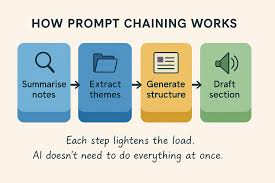
You can feed it your basic story idea or concept. Then, ask it to generate a plot outline. You can specify the type of structure you want.
For example, you might want a three-act structure. Or you might prefer a chronological retelling. The AI can adapt to your needs.
I’ve used it to create chapter outlines. I give it a summary of my book. Then I ask, “Create a 12-chapter outline for this story.
Make sure each chapter ends with a hook.” This gives me a roadmap. It ensures I don’t miss key plot points. It helps me see the overall arc of the story.
This saves me so much time and effort.
Outline Generation Styles
Style: Three-Act Structure
Prompt Example: “Outline a story using the three-act structure. Act 1: Introduce a young detective solving a small town mystery. Act 2: The case becomes bigger and more dangerous.
Act 3: The detective confronts the killer.”
Style: Chapter Breakdown
Prompt Example: “Break down my plot summary into 8-10 chapter summaries. Each summary should suggest a key event or revelation for that chapter.”
Style: Thematic Progression
Prompt Example: “Create an outline for an essay about the evolution of digital communication. Focus on key periods and their major advancements.”
Drafting Content with AI Assistance
This is where things can get really exciting, and also a bit tricky. Can ChatGPT write your story for you? Well, it can certainly write text.
But for compelling, unique writing, you still need to be involved.
Think of it as a co-writer. You can ask it to draft specific scenes. You can ask it to write dialogue between characters.
You can even ask it to describe a setting based on your notes. Then, you take what it gives you and you refine it. You add your voice, your style, and your unique perspective.
For example, I might ask ChatGPT to “Write a scene where two estranged siblings meet after ten years. They are at a quiet cafe. Focus on their awkward conversation.” It will generate dialogue and action.
I then read it, change the wording, add my own character quirks, and make sure it sounds authentic to my story. It’s like having a starting point that’s already half-baked, saving you the effort of the initial kneading.
Drafting Scene Examples
Scene Type: Dialogue Heavy
Prompt Example: “Write a dialogue scene between a mentor and a student. The mentor is giving tough but necessary feedback about the student’s project.”
Scene Type: Action Sequence
Prompt Example: “Describe a tense chase scene through a crowded city market. Focus on sensory details and the protagonist’s fear.”
Scene Type: Emotional Revelation
Prompt Example: “Draft a moment where a character confesses a long-held secret to their best friend. Show the character’s vulnerability and the friend’s reaction.”
Refining and Editing Your Work
Writing is not just about getting words down. It’s also about making those words as strong as they can be. Editing and refining are crucial steps.
ChatGPT can be an excellent tool for this, too.
You can ask it to improve sentence structure. You can ask it to rephrase sentences to make them clearer. It can help you find repetitive words or phrases.
It can even help you check for tone and consistency.
One of my favorite uses is asking it to simplify complex sentences. I’ll paste in a paragraph I’ve written, and ask, “Rewrite this paragraph using simpler language and shorter sentences. Ensure it flows well.” It’s like getting a fresh pair of eyes to spot awkward phrasing.
It’s important to remember it is a tool, and your judgment is still key. I once asked it to “make this more exciting.” It added a lot of exclamation points, which wasn’t quite the tone I was going for! So, you always need to review and adjust.
Editing & Revision Prompts
Revision Goal: Clarity
Prompt Example: “Review this paragraph and suggest ways to make the main point clearer. Rephrase any confusing sentences.”
Revision Goal: Conciseness
Prompt Example: “Condense this text without losing essential information. Remove any redundant words or phrases.”
Revision Goal: Tone Adjustment
Prompt Example: “Make this passage sound more formal/informal, while maintaining its original meaning.”
Specific Use Cases for Different Writers
The way writers use ChatGPT can vary a lot. What works for a novelist might not be ideal for a blogger. Or a poet.
Let’s look at some specific examples.
Fiction Writers: Use it for brainstorming plot points, developing character backstories, writing dialogue, and creating vivid descriptions. You can ask it to explore “what if” scenarios for your characters.
Bloggers and Content Creators: Great for generating article ideas, creating outlines, drafting sections of posts, summarizing research, and even writing social media copy to promote your content. Asking for different angles on a topic is very useful here.
Poets: While AI struggles with the nuances of poetry, it can help with rhyme schemes, suggesting words with specific rhythms, or exploring different metaphorical concepts. You could ask it for metaphors related to “loneliness” or “joy.”
Copywriters: Excellent for drafting ad copy, product descriptions, and email subject lines. You can ask it to generate multiple variations of a headline to test. It can help you find persuasive language.
Academic Writers: Can assist in summarizing research papers, suggesting keywords for literature reviews, or helping to structure arguments. However, it’s crucial to verify all information and avoid plagiarism by ensuring your own voice and critical analysis are present.
Writer Type & Prompt Focus
Writer: Novelist
Focus: Character arcs, plot twists, world-building.
Prompt Example: “Describe a moral dilemma my hero must face that tests their core values.”
Writer: Blogger
Focus: Topic ideas, catchy headlines, content structure.
Prompt Example: “Suggest 5 click-worthy blog titles about saving money on groceries.”
Writer: Copywriter
Focus: Persuasive language, call-to-actions, benefit-driven descriptions.
Prompt Example: “Write three short ad slogans for a new eco-friendly water bottle, highlighting its durability and portability.”
Crafting Effective Prompts: The Details Matter
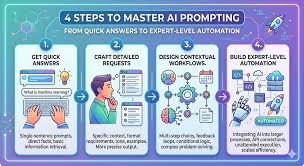
We’ve touched on this, but it’s worth repeating. The quality of the output depends heavily on the quality of your prompt. Think of it like giving ingredients and a recipe to a chef.
Here are some elements of a good prompt:
Be Clear: State exactly what you want. Avoid vague language. Be Specific: Include details like genre, tone, audience, and desired length.
Provide Context: Give background information. Explain the situation or the goal. Set Constraints: Tell it what to avoid or what to focus on.
Ask Questions: Frame your needs as direct questions to the AI.
Let’s say you want a character description. A bad prompt is: “Describe a warrior.” A good prompt is: “Describe a grizzled, middle-aged female warrior who has seen many battles. She carries a chipped sword and has a scar over her left eye.
Her tone should be weary but determined.” See the difference? The more detail you give, the closer the AI gets to what you need.
Prompt Construction Checklist
Clarity: Is your request easy to understand?
Specificity: Have you included key details (genre, tone, audience)?
Context: Have you provided necessary background information?
Constraints: Have you set any limits or focus areas?
Action Verb: Does your prompt clearly ask the AI to do something (e.g., generate, describe, rewrite)?
Ethical Considerations and Best Practices
Using AI in writing brings up important ethical questions. It’s not about cheating, but about using a tool responsibly. Many writers worry about AI replacing them.
It’s more likely to change how we work.
Originality and Plagiarism: AI-generated text can sometimes resemble existing content. Always review and rephrase to ensure your work is original. Never submit AI-generated content as your own without significant editing and your unique input.
Always check against plagiarism detectors.
Transparency: In some contexts, it may be appropriate or even necessary to disclose that AI was used as a tool in your writing process. This builds trust with your audience. Many academic or professional settings now have guidelines.
Your Voice: The goal is to enhance your writing, not
Responsible AI Use
Practice: Never submit raw AI output as your final work.
Edit: Always review, refine, and personalize AI-generated text.
Verify: Fact-check any information provided by the AI.
Attribute: Consider disclosure where appropriate or required.
Your Voice: Ensure your unique perspective and style shine through.
When to Use AI and When Not To
Not every writing task is a perfect fit for AI. Understanding its strengths and weaknesses will help you use it wisely. It’s about finding the right tool for the job.
Good for:
Brainstorming initial ideas. Overcoming writer’s block on specific sections. Generating drafts of routine content (like summaries or basic descriptions).
Rewriting sentences for clarity or conciseness. Exploring different stylistic options. Creating outlines and structures.
Not so good for:
Creating deeply emotional or nuanced poetry. Writing highly personal memoirs or reflective essays. Tasks requiring deep critical analysis and original research synthesis.
Anything where absolute factual accuracy and ethical sourcing are paramount without human oversight. * Capturing subtle cultural references or highly specific industry jargon without extensive guidance.
I learned this when trying to write a deeply personal reflection on a family event. The AI could string words together, but it lacked the genuine emotion and lived experience that my readers needed to connect with. That’s when I knew some things are best left to us humans.
AI Use Case Matrix
Task: Idea Generation
AI Suitability: High
Reason: Excellent for quantity and variety of concepts.
Task: Personal Essay
AI Suitability: Low
Reason: Lacks genuine emotion and lived experience.
Task: Content Editing (Clarity)
AI Suitability: High
Reason: Efficient at rephrasing and simplifying.
The Future of Writing with AI
The role of AI in writing is only going to grow. Tools like ChatGPT will likely become more sophisticated. They will integrate more seamlessly into our writing workflows.
For writers, this means adapting. It means learning to work alongside AI, not against it. The writers who embrace these tools will likely be the ones who are most efficient and creative.
They will be able to produce more content of higher quality.
It’s an exciting time to be a writer. AI offers new avenues for creativity and productivity. The key is to use it as an enhancement, a collaborator, and a tool to amplify your own unique talents.
Don’t be afraid to experiment. Your writing journey can become even more rewarding with these new allies.
Frequently Asked Questions About ChatGPT for Writers
Can ChatGPT write an entire book for me?
While ChatGPT can generate large amounts of text, it is not recommended to have it write an entire book for you without significant human input. AI-generated books often lack a unique voice, deep emotional resonance, and original perspective. It’s best used as a co-writer for brainstorming, drafting sections, and refining your own ideas.
Will using ChatGPT make me a less creative writer?
No, it doesn’t have to. When used as a tool for brainstorming and overcoming blocks, ChatGPT can actually boost your creativity. It can expose you to new ideas and perspectives you might not have found on your own.
The key is to use it to supplement, not replace, your own creative thinking.
Is it ethical to use AI-generated text in my published work?
The ethics depend on how you use it. It is generally considered unethical to pass off raw, unedited AI-generated text as your own original work. However, using AI for brainstorming, outlining, drafting sections, and editing, and then significantly rewriting and infusing your own voice, is a widely accepted practice.
Transparency can also be important depending on the context.
How do I make sure my writing with ChatGPT is unique?
The best way is to edit and rewrite the AI’s output extensively. Add your own experiences, opinions, and unique voice. Change sentence structures, vocabulary, and add personal anecdotes.
Use plagiarism checkers to be sure. Your personal touch is what makes writing unique.
Can ChatGPT help me with specific writing styles, like screenplays or poetry?
Yes, to a degree. You can prompt ChatGPT to generate text in specific formats, like screenplay scenes or even rhyming couplets. However, AI often struggles with the deeper artistic nuances, emotional subtlety, and structural requirements of highly specialized forms like poetry or complex screenplays.
It can provide a starting point or variations, but expert human revision is essential.
What if the information ChatGPT gives me is incorrect?
ChatGPT can sometimes generate incorrect or outdated information. It’s crucial to always fact-check any information it provides, especially for non-fiction writing, academic work, or any content where accuracy is vital. Treat AI output as a suggestion that needs verification by reliable sources.
How much does ChatGPT cost for writers?
ChatGPT offers a free version, which is quite powerful for many writing tasks. There are also paid subscription plans (like ChatGPT Plus) that offer access to more advanced models, faster response times, and priority access during peak usage. The free version is a great place to start for most writers.
Conclusion
Using ChatGPT as a writing assistant can truly transform your process. It’s a powerful tool for brainstorming, outlining, drafting, and refining. By crafting clear, specific prompts, you can unlock its full potential.
Remember to always keep your unique voice at the forefront and to use AI ethically and responsibly. Happy writing!



Leave a Reply