
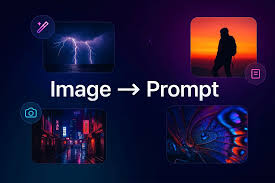
The best AI image generators turn your words into visuals. Crafting a good prompt is key to getting the art you imagine. This guide explains how to write effective prompts and use AI art tools.
What Exactly Are AI Image Generators?
AI image generators are smart computer programs. They use artificial intelligence to create pictures. You give them text, called a prompt.
The AI then makes an image based on your words. It’s like telling a story and seeing it drawn. These tools have gotten very good, very fast.
They can make almost anything you can think of. From realistic photos to cartoon styles, they do it all. Understanding how they “think” helps you get better results.
It’s a mix of art and science. The goal is to make them understand your vision clearly.
These programs learn by looking at millions of images. They also look at the words that describe those images. This helps them connect ideas.
For instance, they learn what a “cat” looks like. They also learn what “fluffy” means. When you combine “fluffy cat,” they put those ideas together.
The more detailed your prompt, the more specific the image. This technology is exciting for many people. It lets anyone be an artist.
It can also help artists explore new ideas quickly.
How Do AI Image Generators Work (The Simple Version)
Think of it like a chef. You give the chef a recipe (your prompt). The chef knows how to mix ingredients (data) to make a dish (the image).
AI image generators have learned about “ingredients” like colors, shapes, and styles. They have also learned how to combine them. When you type, “a red apple on a wooden table,” they know what a red apple is.
They know what wood looks like. They know how to place one thing next to another. It’s a complex process, but the idea is simple: words turn into pictures.
The AI models are trained on vast datasets. These datasets are huge collections of images and text. The models learn patterns and relationships.
They learn that certain words relate to certain visual elements. For example, “impressionist painting” tells it to use soft brush strokes and vibrant colors. “Cyberpunk city” tells it to use neon lights and futuristic buildings.
It’s all about recognizing and recreating those learned connections.
My First Few AI Art Fails (And What I Learned)
I remember my first time trying to make a fantasy castle. I typed “a big castle.” What I got was… okay. It looked like a castle, sure.
But it was boring. It wasn’t the grand, magical place I saw in my mind. It was just a blocky shape.
Then I tried “a magical fantasy castle on a high mountain, with dragons flying around it.” Better, but still not quite right. The dragons looked weird. The magic wasn’t visible.
That’s when I realized I had to be more specific. I started adding details. “An ancient, crumbling fantasy castle made of dark stone, perched on a jagged, snowy mountain peak.
Wisps of mystical fog curl around its spires. Two majestic, golden-scaled dragons soar through a twilight sky, their wings catching the last rays of the sun.” Wow! The difference was night and day.
The AI understood. It gave me something closer to my vision. The key is to add descriptive words for everything: the subject, the setting, the mood, the style.
Prompt Building Blocks
Subject: What is the main thing you want to see? (e.g., a dog, a house, a person)
Action/State: What is the subject doing? (e.g., running, sleeping, glowing)
Setting: Where is it happening? (e.g., in a forest, on a spaceship, a cozy room)
Style: How should it look? (e.g., a photograph, a watercolor painting, anime)
Details: Add specific colors, textures, lighting, mood. (e.g., “warm sunlight,” “rough texture,” “sad mood”)
The Anatomy of a Great AI Image Prompt
A good prompt is like a map. It guides the AI precisely. It’s not just about listing words.
It’s about how you arrange them. You want to be clear and descriptive. Think about what you want to see.
What colors are important? What kind of feeling should the image have? Who or what is the main focus?
Where is it located?
Start with your main subject. Then add what it’s doing. After that, describe the environment.
Finally, specify the artistic style. Don’t forget to add details about lighting and mood. These elements make a huge difference.
They help the AI understand the overall vision. It’s a step-by-step process. Each part of the prompt adds another layer of instruction.
This helps the AI build a richer, more accurate image. It’s like adding more brushstrokes to your digital canvas.
Key components of a strong prompt:
- Main Subject: The central element of your image.
- Action/Pose: What the subject is doing or how it is positioned.
- Environment/Background: The setting where the subject exists.
- Art Style: The artistic rendering (e.g., photorealistic, oil painting, pixel art).
- Lighting: The type and direction of light (e.g., golden hour, moody studio lighting).
- Mood/Atmosphere: The feeling or emotion the image should evoke (e.g., peaceful, chaotic, mysterious).
- Camera Angle/Shot: How the scene is framed (e.g., close-up, wide shot, aerial view).
- Color Palette: Specific colors or color schemes.
- Artist Inspiration: Referencing a famous artist’s style (use with care).
Putting It All Together: Prompt Examples That Work
Let’s take an example. Instead of just “a cat,” try this:
“A fluffy Persian cat with emerald green eyes, curled up asleep on a velvet armchair next to a sunlit window. Warm morning light streams in, casting soft shadows. The style is a realistic oil painting, evoking a sense of peace and comfort.”
See how much more specific that is? You know the type of cat, its eyes, what it’s doing, where it is, the lighting, and the art style. This gives the AI a lot more to work with.
Another example. You want a sci-fi scene:
“A bustling futuristic marketplace on a neon-lit alien planet. Diverse alien creatures haggle over glowing fruits. Towering, organic skyscrapers pierce the hazy, purple sky.
The atmosphere is vibrant and slightly dangerous. Rendered as a detailed digital illustration with a wide-angle shot.”
This prompt includes setting, characters, mood, color, and even camera perspective. It tells the AI exactly what kind of scene to build. The more detailed you are, the closer you’ll get to your desired outcome.
It’s an iterative process. You might need to tweak prompts a few times.
Prompt Crafting: Dos and Don’ts
Do:
- Be descriptive and specific.
- Use strong adjectives and adverbs.
- Mention art styles, lighting, and mood.
- Experiment with different wordings.
- Break down complex ideas into smaller parts.
Don’t:
- Be too vague or general.
- Use negative prompts (unless the tool supports it) like “no dogs.”
- Expect perfection on the first try.
- Overload the prompt with too many unrelated ideas.
Exploring Different Art Styles with Your Prompts
One of the coolest things about AI image generators is the variety of styles you can create. You aren’t limited to just one look. You can ask for anything from a classic oil painting to a modern pixel art piece.
This opens up a world of creative possibilities.
If you want something that looks like a famous painting, you can mention the artist’s name. For example, “A portrait of a wise old wizard in the style of Rembrandt.” The AI will try to mimic Rembrandt’s lighting and brushwork. You can also ask for more abstract styles.
Try “a swirling nebula of colors, abstract expressionism.” Or maybe something vintage, like “a vintage travel poster of a serene beach at sunset.”
Here are some style ideas to play with:
- Photorealistic: “Ultra-realistic photograph of.”
- Painting Styles: “Impressionist painting of.”, “Watercolor landscape.”, “Oil on canvas, detailed portrait.”
- Digital Art: “Concept art for a video game.”, “3D render.”, “Vaporwave aesthetic.”
- Illustration Styles: “Children’s book illustration.”, “Comic book art.”, “Linocut print.”
- Specific Eras/Movements: “Art Nouveau design.”, “Baroque style painting.”, “Surrealist scene.”
Remember, mixing styles can also yield interesting results. Just be clear about what you want.
Understanding Negative Prompts and Parameters
Some AI image tools let you use “negative prompts.” This is where you tell the AI what you don’t want to see. For example, if you are generating a portrait and don’t want it to have hands, you could add a negative prompt like “extra fingers, deformed hands.” This helps refine the output and avoid common AI mistakes.
Beyond prompts, many generators have parameters. These are settings that control the output. You might find settings for aspect ratio (like square, wide, or tall images).
There could also be settings for how “creative” the AI is allowed to be. Some allow you to choose the specific AI model version. Understanding these parameters can give you more control over the final image.
It’s worth checking the settings available on your chosen tool.
Quick Scan: Prompt Refinement Tips
| Problem | Solution |
|---|---|
| Image is too generic. | Add more descriptive adjectives and nouns. Specify the scene and mood. |
| Wrong style. | Clearly state the desired art style (e.g., “oil painting,” “digital art,” “photograph”). |
| Unwanted elements appear. | Use negative prompts if available. Rephrase to exclude those elements. |
| Colors are off. | Specify a color palette or dominant colors in your prompt. |
| Composition is awkward. | Mention camera angles, shots (close-up, wide shot), or framing. |
Popular AI Image Generation Platforms
There are many AI image generators out there. Each has its strengths. Some are free to try.
Others have paid subscriptions for more features. Popular ones include Midjourney, DALL-E, Stable Diffusion, and Leonardo AI. Many offer different levels of control and artistic styles.
Midjourney is known for its artistic and often surreal outputs. DALL-E, from OpenAI, is great at understanding complex prompts and creating realistic images. Stable Diffusion is very powerful and can be run locally if you have a good computer.
Leonardo AI is also a strong contender, offering many customization options. Exploring a few of these will help you find the one that best fits your needs and creative style. Each platform might interpret prompts slightly differently, so experimentation is key.
When choosing a platform, consider:
- Ease of Use: How simple is the interface?
- Cost: Is it free, subscription-based, or pay-per-image?
- Artistic Output: Does it produce the styles you like?
- Customization: Does it offer parameters or advanced settings?
- Community: Is there a helpful community for tips and inspiration?
The Role of AI in Art and Creativity
AI image generators are not here to replace human artists. Instead, they are powerful tools. They can help artists explore ideas faster.
They can create concept art. They can even help overcome creative blocks. Many artists use AI to generate inspiration.
They might take an AI image and then paint over it or edit it further. It’s a collaborative process.
For non-artists, these tools democratize creation. Anyone can bring their imagination to life. You can create custom images for presentations, social media, or just for fun.
It’s a new medium for expression. The ethical considerations around AI art are important. Issues like copyright and ownership are still being figured out.
But the creative potential is undeniable. It’s an exciting time to be involved with visual creation.
AI Art: Myth vs. Reality
Myth: AI art is cheating or not real art.
Reality: AI is a tool, like a paintbrush or camera. The creativity comes from the user’s vision and prompt engineering.
Myth: AI will take all artist jobs.
Reality: AI is more likely to change how artists work, creating new roles and opportunities. It augments, rather than replaces, human skill.
Myth: Anyone can make amazing art with zero effort.
Reality: While easy to start, creating truly compelling AI art requires skill in prompt writing, understanding the tools, and iterative refinement.
Ethical Considerations and Copyright
As AI art becomes more common, questions about ethics and copyright arise. Who owns the AI-generated image? The person who wrote the prompt?
The company that made the AI? These are complex legal issues that are still being debated and defined. Many platforms have terms of service that outline usage rights.
It’s also important to be mindful of how AI models are trained. They learn from vast amounts of existing art. This raises concerns about artists’ work being used without permission.
Many AI companies are working on solutions and guidelines. It’s good practice to understand the terms of service for any AI art tool you use. Also, be transparent about your use of AI in your creative work.
What This Means For Your Creative Projects
If you have a project, big or small, AI image generation can help. Need a unique image for a blog post? Type it out.
Want to visualize a character for a story? Describe them. Planning a website and need custom graphics?
AI can assist. It’s a way to get high-quality visuals quickly and affordably.
Think about your current needs. Are you trying to explain a complex idea visually? Can AI help you create an infographic?
Do you need a mood board for a design project? AI can generate multiple options to spark ideas. Even if you are an experienced artist, AI can be a fantastic brainstorming partner.
It can show you possibilities you might not have considered. It speeds up the ideation phase dramatically.
Quick Fixes and Tips for Better Prompts
Here are some quick tips to improve your AI art prompts:
- Start Simple, Then Build: Begin with a core idea and add details gradually.
- Use Strong Verbs and Adjectives: Words like “gleaming,” “ancient,” “whispering,” “towering” add depth.
- Specify Lighting: “Golden hour light,” “dramatic studio lighting,” “moonlit” can change the mood.
- Mention Mood: “Joyful,” “melancholy,” “mysterious,” “energetic” set the tone.
- Experiment with Aspect Ratios: If the tool allows, try different shapes for your image.
- Learn from Others: Look at prompts that generated images you like.
- Iterate! Don’t be afraid to change words, add details, or try a slightly different phrasing.
AI Prompt Quick Reference
Elements to Include:
- Subject: What it is.
- Action: What it’s doing.
- Setting: Where it is.
- Style: How it looks.
- Lighting: How it’s lit.
- Mood: The feeling.
- Color: Specific hues.
- Camera: Angle/shot type.
Frequently Asked Questions About AI Image Prompts
What is the most important part of an AI image prompt?
The most important part is clarity and specificity. Your prompt needs to clearly describe what you want the AI to generate, leaving little room for misinterpretation. This includes details about the subject, style, lighting, and mood.
Can I use real people’s names in my prompts?
Using names of real people, especially celebrities or public figures, can be ethically complex and may violate the terms of service of some AI image generators. It’s generally safer to describe the characteristics of a person you want rather than using a specific name, unless the platform explicitly allows it for artistic purposes.
How do I make an AI image look like a photograph?
To make an image look like a photograph, include terms like “photorealistic,” “high-resolution photograph,” “DSLR photo,” or specify camera settings like “f/1.8 aperture,” “shallow depth of field,” or “cinematic lighting.” Mentioning a specific type of camera or lens can also help.
What if the AI keeps generating unwanted elements?
If you’re repeatedly getting unwanted elements, try using negative prompts if your AI tool supports them. You can also rephrase your main prompt to be more descriptive and guide the AI away from those elements. Sometimes, starting a new generation with a slightly different seed or prompt can help.
How can I make AI art look more unique?
To make AI art more unique, combine unusual concepts, experiment with less common art styles, or describe very specific moods and atmospheres. The more detailed and imaginative your prompt, the more likely you are to create something novel. Mixing elements from different styles or time periods can also lead to unique results.
Are AI image generators good for beginners?
Yes, many AI image generators are designed to be beginner-friendly. You can start with simple prompts and gradually learn to use more complex phrasing. Platforms like DALL-E and Leonardo AI often have intuitive interfaces.
The key is to start experimenting and learning as you go.
Wrapping Up: Your Creative Journey with AI
Diving into AI image generation is an exciting adventure. It blends technology with your own imagination. Mastering prompt writing is key.
It’s a skill that grows with practice. Don’t be afraid to experiment. Try new words, styles, and ideas.
Your creativity has no limits here. Enjoy the process of bringing your visions to life!

Leave a Reply